
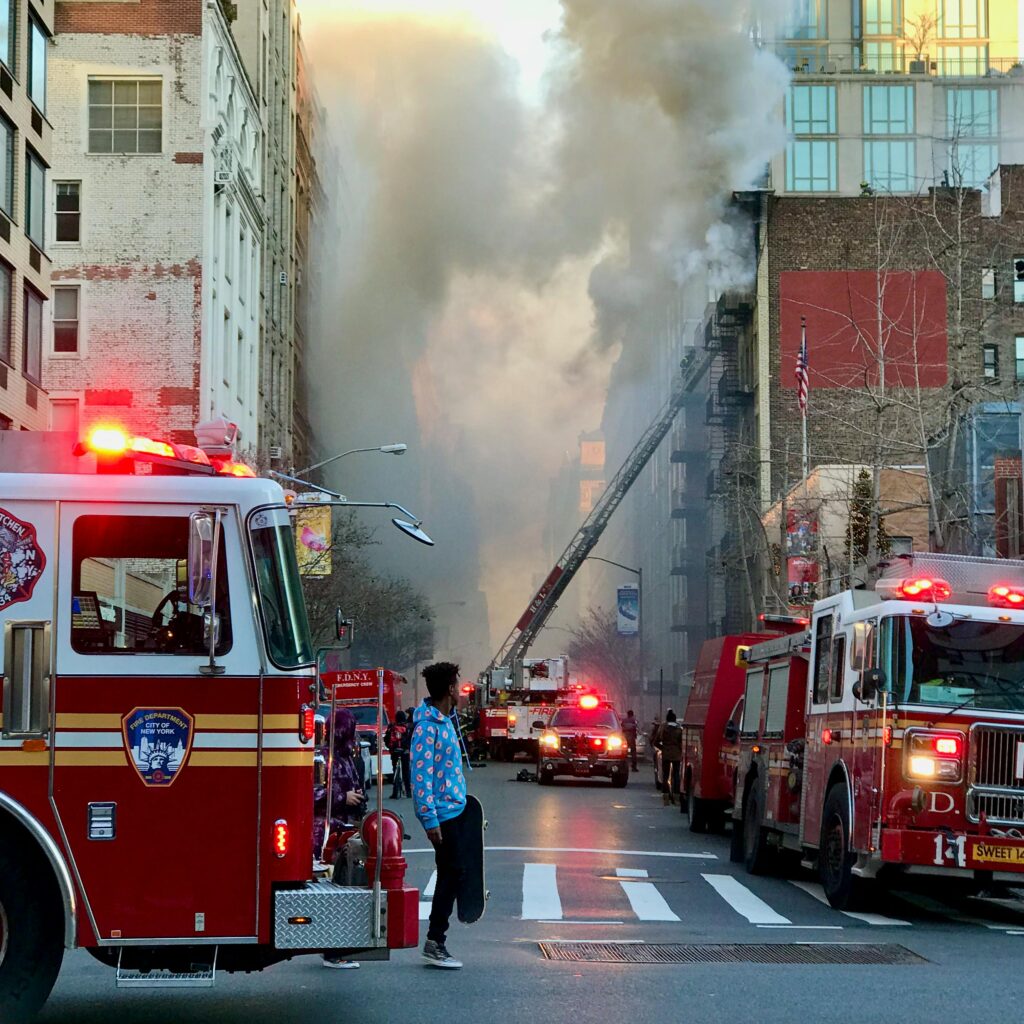
Fires can spread fast when safety systems are broken or ignored. New York City requires protections to slow smoke and fire, yet agencies continue to flag lapses across the NYCHA system. If you were hurt in a fire at a NYCHA development, you may be able to recover compensation for medical bills, lost income, and pain and suffering. There are strict deadlines, so act quickly.
What makes NYCHA Fires Especially Dangerous
- Broken or misadjusted self-closing doors. NYC law requires apartment and common-area doors to self-close and latch to contain smoke. HPD enforces 14-day correction timelines for violations. When these doors fail, smoke migrates through stairwells and corridors, increasing injuries.
- Poorly maintained egress and common areas. Combustible items left in hallways and stairwells create fuel and block escape routes. A recent NYC hallway couch fire injured multiple people, underscoring how fast common-area combustibles can escalate.
- Inconsistent fire-safety oversight. NYC’s Department of Investigation has issued reports calling out gaps in NYCHA’s fire-safety practices and, more recently, failures in required fire-guard oversight at senior buildings.
- Aging buildings and systems. Thousands of NYCHA apartments sit in older high-rises where heat plants, electrical, and alarms require constant upkeep. NYCHA’s own guidelines reiterate the need for compliant self-closing doors and rated hardware.
How a NYCHA fire-injury lawyer helps
- Respond Quickly: There is a strict 90-day time limit to file a claim and an attorney can help you file what you need when you need to.
- Rapid investigation. Secure FDNY reports, building camera footage, work orders, HPD violation histories, and door-maintenance logs before they disappear.
- Defect and code analysis. Evaluate self-closing door compliance, stairwell pressurization, alarm function, and egress maintenance against city rules and NYCHA procedures.
- Identify all responsible parties. NYCHA, private managers under PACT/RAD, contractors, alarm vendors, and maintenance providers may share liability.
- Preserve and prove damages. Document burns, smoke inhalation, orthopedic and neurologic injuries, lost wages, and long-term care needs.
- Keep you on deadline. Prepare the Notice of Claim and 50-h appearance, then litigate for full compensation.
Recent NYC and NYCHA Fire Incidents Illustrate the Risks
- Brownsville, Brooklyn NYCHA complex: 12 injured, including serious injuries, at Langston Hughes Apartments.
- East Harlem, NYCHA’s Wagner Houses: one resident seriously hurt and a related fatality reported in separate coverage.
- Bronx NYCHA high-rise: civilians and firefighters injured in a 16-story building fire.
- Citywide example of hallway combustibles: 7 injured after a couch ignited in a hallway on the Upper West Side. While not a NYCHA building, the mechanism mirrors common-area hazards residents report.
What to do right now
- Get medical care and follow all treatment.
- Photograph doors, stairwells, alarms, and any blocked or combustible conditions.
- Save clothes, shoes, and devices damaged by heat or smoke.
- Write down witnesses, apartment numbers, and staff names.
- Contact an attorney at The Dearie Law Firm immediately to protect your claim window.