
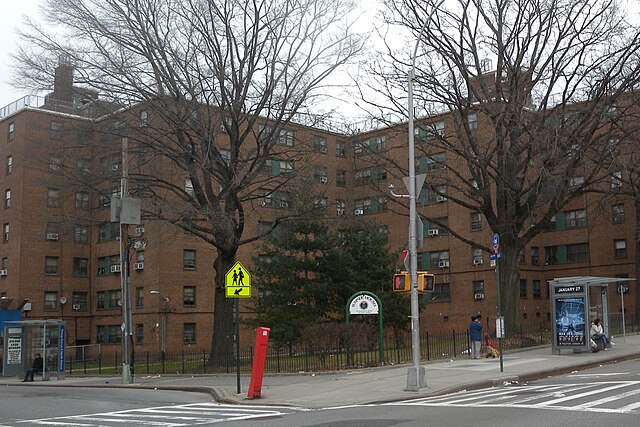
Sumner Houses NYCHA Injury Lawyer
The Sumner Houses sit in Bedford-Stuyvesant, Brooklyn, one of the most active and densely populated residential neighborhoods in the borough. Named after U.S. Senator Charles Sumner, the complex houses thousands of residents in a mix of mid-rise buildings. Like most large-scale NYCHA properties in Brooklyn, Sumner Houses struggles with persistent maintenance challenges. Aging mechanical systems break down. Heat and hot water delivery fails. Stairwells and common areas receive less attention than residents need. If you suffered an injury here because of a hazardous condition that NYCHA should have repaired, the law gives you a path to recovery. But the window to act is short. Call a NYCHA Injury Lawyer today.
The Dearie Law Firm, P.C. has represented NYCHA injury clients in Bed-Stuy and throughout Brooklyn for more than 35 years. We handle these cases from first intake through resolution. We know what it takes to build a strong claim using NYCHA’s own records.
The Maintenance Landscape at Sumner Houses
Bedford-Stuyvesant has changed rapidly over the past decade. But the physical plant of its NYCHA developments has not kept pace with the surrounding community’s investment. At Sumner Houses, residents report recurring issues with heat and hot water interruption, slow elevator repair response times, and moisture-related conditions in apartments that go unaddressed through multiple complaint cycles. The development’s maintenance superintendent position carries serious responsibility for keeping systems running. When that maintenance falls short, residents face real risk.
Hazards that commonly lead to injuries at Sumner Houses include:
- Stair and landing falls from broken step surfaces, missing or wobbly handrails, and inadequate stairwell lighting
- Boiler failures and extended no-heat periods, which create secondary risks when residents seek warmth from makeshift sources. Boilers can also explode.
- Security failures at building entrances including non-functional intercom systems and unsecured lobby doors
- Fire and smoke injuries from appliance or electrical failures
- Elevator malfunctions that force residents into stairwells that may themselves be hazardous
NYCHA’s Duty of Care and What It Means for Your Claim
New York law requires NYCHA to maintain its properties in a reasonably safe condition. The authority must investigate and respond to reported hazards within a reasonable time. Reports come through 311, the MyNYCHA platform, or direct contact with building management. Failure to act after receiving notice can form the basis of a negligence claim. Our firm obtains NYCHA’s internal maintenance records, work orders, and complaint histories to establish this notice and the timeline of inaction.
The 90-day Notice of Claim: Your Most Important Deadline
In nearly all NYCHA injury cases, you must serve a Notice of Claim on NYCHA and the City of New York within 90 days of the date you were injured. This formal written notice is a legal prerequisite to filing a lawsuit. Without it, the court can permanently dismiss your claim. After you serve the Notice, NYCHA may require a 50-h examination: a sworn oral deposition taken before any lawsuit is filed. Attending this examination without legal counsel creates significant risk. You must generally file the lawsuit itself within one year and 90 days from the injury date.
The 90-day clock does not pause while you recover or while you try to figure out what happened. It runs from day the injury occurred.
Steps to Take Right Now If You Were Injured at Sumner Houses
- Get medical treatment immediately and follow through on every recommended follow-up appointment.
- Report the hazardous condition in writing to NYCHA building management or through 311/MyNYCHA. Save the confirmation.
- Photograph the hazard before anyone repairs it. Capture it from multiple distances and angles.
- Note the lighting conditions, any warning signs, and the exact location within the building.
- Collect names and contact information of neighbors or witnesses who saw the incident or know the condition existed before.
- Keep every bill, receipt, and proof of lost income. Start now.
- Write a brief daily journal of your symptoms and how the injury affects your routine.
- Call a lawyer before giving any recorded statement to NYCHA or its representatives.
How The Dearie Law Firm Builds a Sumner Houses Case
Our firm immediately sends an evidence hold letter to NYCHA. We require the authority to preserve all relevant records before routine destruction: maintenance logs, work orders, inspection reports, 311 histories, and surveillance video. Then we pursue those records through legal process to build the notice timeline. When was the condition first reported? When was it inspected? What did NYCHA actually do in response? We also look beyond NYCHA to identify any third-party contractors who may bear independent responsibility for the condition. We then construct a complete damages presentation connecting the building negligence to your medical records, treatment history, and financial losses.
Damages That May Be Available to You
A NYCHA injury claim at Sumner Houses may entitle you to compensation for:
- Emergency and ongoing medical care
- Physical therapy and rehabilitation costs
- Lost wages from missed work
- Reduced earning capacity where the injury affects your ability to work long term
- Pain and suffering, both physical and emotional
- Future medical expenses supported by medical documentation
- Out-of-pocket costs tied to the injury and recovery process
Contact The Dearie Law Firm for a Free Case Review
If you were hurt at Sumner Houses, do not wait. The 90-day Notice of Claim deadline runs from the date of injury. Call The Dearie Law Firm, P.C. for a free case review. We handle NYCHA cases on contingency. You pay nothing unless we recover compensation for you.