
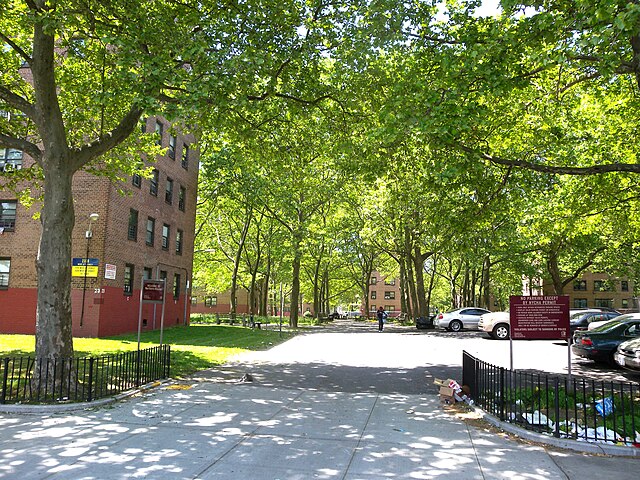
Marlboro Houses NYCHA Injury Lawyer
The Marlboro Houses sit on 30 acres in the Gravesend neighborhood of Brooklyn and it’s the only NYCHA development in this community. Built in 1954, the complex spans 28 buildings and was designed to house approximately 1,800 families. Decades of underinvestment have left many of its structures, hallways, stairwells, and mechanical systems in varying states of disrepair. When maintenance falls behind at a development this size, the consequences aren’t theoretical. Residents get hurt. If you or someone in your household was injured at Marlboro Houses because of a hazardous condition that NYCHA failed to fix, you may have legal options — but the deadlines to act are strict and begin the day you are injured. Call a NYCHA injury lawyer today.
The Dearie Law Firm, P.C. has spent more than 35 years representing people injured on NYCHA property across New York City. We know how to investigate these claims, preserve the evidence that matters, and present a case built on NYCHA’s own records.
What Makes Marlboro Houses Cases Distinct
Marlboro’s size and layout means that outdoor walkways, courtyard pathways, and secondary stairwells see heavy daily use with uneven maintenance coverage. The development was also significantly impacted by Hurricane Sandy in 2012, and infrastructure vulnerabilities identified after the storm have not all been fully addressed. Climate-related stressors including flooding and humidity accelerate deterioration of building envelopes, boiler systems, and ground-floor conditions.
Common hazards that have led to injuries at Marlboro Houses include:
- Stairwell falls caused by broken treads, missing or loose handrails, and inadequate lighting in interior and exterior stairwells
- Elevator malfunctions like sudden drops, misdoors, or extended outages that force residents to use damaged stairs
- Ceiling leaks and water intrusion leading to slippery floors and, over time, structural weakening of overhead surfaces
- Boiler system failures that leave residents without heat or hot water during cold months. Plus, boilers can explode.
- Security failures including broken entry doors and poorly lit common areas that increase assault risk
NYCHA’s Legal Duty and What It Means for Your Case
Under New York law, NYCHA aka the property owner is required to maintain its buildings in a reasonably safe condition and to correct known hazards within a reasonable time. That duty applies to hallways, stairwells, elevators, parking areas, walkways, and the exterior grounds. When NYCHA receives complaints through its 311 system, MyNYCHA app, or tenant association, and fails to respond in a timely way, it can be held liable for injuries that result from those unaddressed conditions. A strong case often turns on whether NYCHA had notice of the specific hazard and how long it went without a meaningful repair.
The 90-day Notice of Claim: Why It Matters
This is the deadline that catches most injured people off guard. In most cases involving NYCHA or a City entity, a Notice of Claim must be served within 90 days of the date of your injury. This is not a lawsuit — it is a formal legal notice that preserves your right to sue. After the Notice is served, NYCHA may schedule a General Municipal Law 50-h examination: a recorded question-and-answer session under oath that occurs before any lawsuit is filed. You should have legal representation before that hearing. The lawsuit itself must typically be filed within one year and 90 days of the incident.
Missing the 90-day window can permanently end your right to recover — even if NYCHA’s negligence is clear and well-documented.
Steps to Take After an Injury at Marlboro Houses
- Get medical care immediately and follow through on all follow-up appointments. Gaps in treatment are used against claimants.
- Report the condition to NYCHA in writing and keep any confirmation number or acknowledgment.
- Photograph the exact hazard before it is repaired or altered — wide shots and close-ups both matter.
- Capture ambient conditions: lighting levels, wet surfaces, missing signage, the state of handrails.
- Get the names and contact information of any witnesses, including neighbors who have reported the same problem.
- Keep every receipt including medical, pharmacy, transportation, and any out-of-pocket costs.
- Track your limitations daily: missed work, reduced mobility, pain levels, and how your injury has changed your routine.
- Contact a lawyer before you give any recorded statement or attend any NYCHA-initiated interview.
How The Dearie Law Firm Builds a Marlboro Houses Claim
When our firm takes a Marlboro Houses case, we move quickly. We send evidence preservation letters to NYCHA demanding that maintenance records, work orders, complaint histories, and video footage be held and not destroyed. We obtain the full 311 and MyNYCHA complaint record for the location where you were hurt. This record often shows that NYCHA received repeated notice of the same hazard and failed to act. This is central to proving liability. We also identify whether any third-party contractors had responsibility for the condition that caused your injury, since those parties may also be liable. Then we connect the building evidence to your medical records, treatment timeline, and documented wage loss to build a complete damages picture.
Damages You May Be Able to Recover
A successful NYCHA injury claim may include compensation for:
- Emergency and follow-up medical treatment
- Rehabilitation and physical therapy
- Lost wages and reduced earning capacity
- Future medical costs supported by physician opinion
- Pain and suffering
- Out-of-pocket costs connected to the injury and recovery
Contact The Dearie Law Firm for a Free Case Review
If you were hurt at Marlboro Houses, do not wait to get legal guidance. The 90-day clock starts the day you are injured. Call The Dearie Law Firm, P.C. for a free case review. We work on contingency, which means no legal fees unless we recover compensation for you.