
Silica Dust Exposure on NYC Construction Sites: Legal Rights and Occupational Disease Claims
Silica dust cases are fundamentally different from acute construction accident cases. That difference runs through every aspect of the legal analysis. The statute of limitations works differently. The causation framework is different. The evidence required is different. The types of defendants available are different.
An acute construction accident has a date, a location, and a mechanism that is visible and usually documented. A silica disease case has a decades-long exposure history, a diagnosis that arrived years or decades after the last relevant exposure, and causation that requires medical and industrial hygiene expert testimony to establish.
Understanding these differences is essential before pursuing a claim. The Dearie Law Firm, P.C. has represented workers with silica-related occupational diseases. We understand how to build these cases from exposure history through diagnosis and into court.
What Happens to Lungs Exposed to Crystalline Silica
Crystalline silica is the form found in concrete, mortar, sand, and stone. It is distinguished from amorphous silica by its crystalline molecular structure. That structure is what makes it biologically dangerous.
When inhaled, crystalline silica particles lodge in the alveoli. These are the small air sacs in the lung where oxygen exchange occurs. The immune system dispatches macrophages to engulf the particles. But macrophages cannot dissolve silica. Instead, they die. They release the silica. They trigger a new inflammatory cycle.
Over years and decades, this process creates nodular fibrosis. Discrete areas of scar tissue progressively reduce the lung’s functional capacity.
Unlike most organ damage, silicosis does not reverse when the exposure ends. The inflammatory and fibrotic process can continue progressing for years after the last silica exposure. This explains why workers who completed a career in masonry or concrete work and retired into a dust-free environment can still develop worsening disease.
The International Agency for Research on Cancer classifies inhaled crystalline silica from occupational sources as a Group 1 carcinogen. This means it definitively causes cancer in humans. The lung cancer risk from crystalline silica exposure is independent of smoking status. Smoking significantly amplifies it.
The Critical Legal Distinction: New York’s Discovery Rule for Occupational Disease
The statute of limitations for occupational disease claims in New York is where silica cases diverge most sharply from acute construction accident claims.
In an acute accident case, the three-year personal injury statute of limitations runs from the date of injury. A fixed and knowable date. In an occupational disease case, applying that same rule would make most claims impossible. A worker exposed to silica in the 1990s would have had three years from the last exposure to file suit. But silicosis often takes 10 to 30 years to manifest clinically. Under a strict exposure-date rule, virtually every silicosis claim would be time-barred before the worker even knew they were sick.
New York courts have addressed this through the discovery rule. In occupational disease cases, the statute of limitations runs from the date of discovery. This is the date when the plaintiff knew or should have known that they had a condition caused by a work-related exposure. In practice, courts look for the date of diagnosis, or the date a physician first told the patient their condition was likely work-related, as the trigger for the limitations period.
This rule has enormous practical significance. A worker who was exposed to silica dust on construction sites from 1985 through 2005, received a silicosis diagnosis in 2022, and consults an attorney in 2025 may have a timely claim. Even though the exposure ended 20 years ago.
Do not assume that the passage of time since your construction work has eliminated your legal options without first consulting an attorney who handles occupational disease claims.
The Third-Party Liability Framework in Silica Cases
Silica exposure cases have two primary avenues for legal recovery beyond workers’ compensation. Third-party negligence claims against general contractors and property owners. Product liability claims against silica-containing product manufacturers and equipment manufacturers.
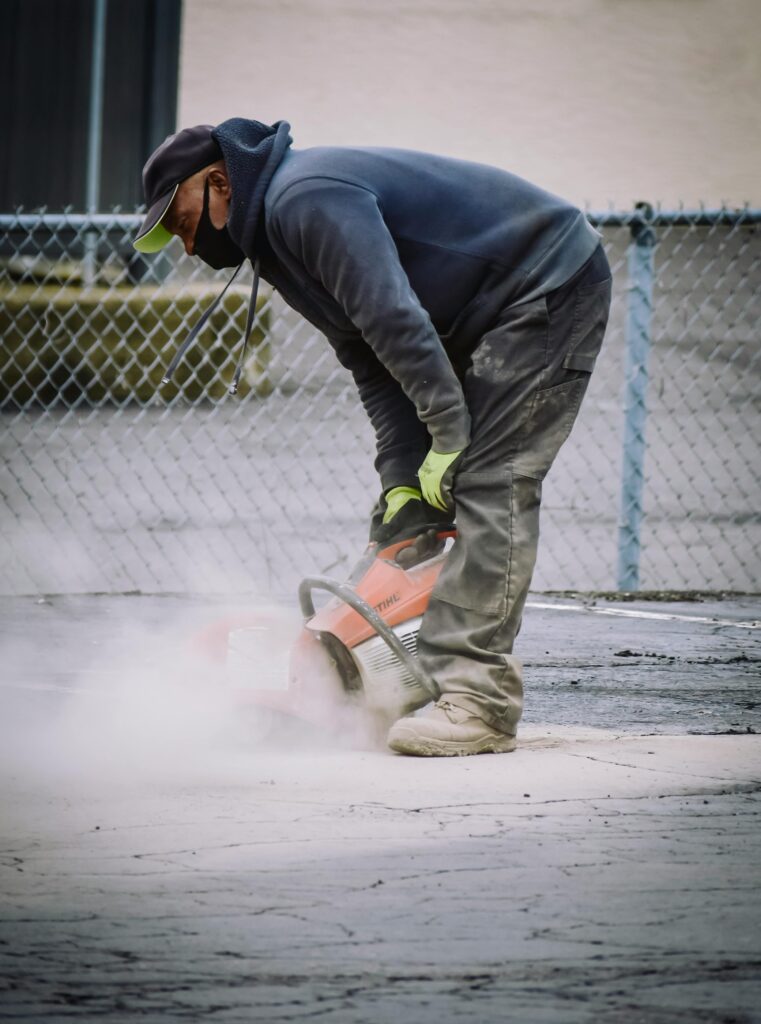
Third-party negligence claims are available when the general contractor or property owner had control over the work environment and failed to implement reasonable dust controls. This theory is strongest when the defendant knew about the silica hazard through OSHA inspections, prior incidents, or industry knowledge, and failed to require engineering controls. Engineering controls include wet cutting, vacuum-equipped tools, and local exhaust ventilation.
The 2017 effective date of OSHA’s silica standard (29 CFR 1926.1153) is particularly relevant. General contractors who allowed dry concrete cutting or uncontrolled silica-generating operations on their sites after 2017 face a strong negligence argument. They violated specific regulatory requirements they were legally obligated to enforce.
Product liability claims target companies whose products generated dangerous silica exposures through inadequate warnings or defective design. Manufacturers of masonry products, concrete mixes, and engineered stone countertops have faced significant litigation over their failure to warn users about silica hazards.
Silica in engineered stone countertops has produced an emerging wave of occupational disease litigation among fabrication and installation workers. Engineered stone can contain 90% or more crystalline silica by weight. This is compared to 30-40% in natural stone.
Building the Exposure History: The Core Challenge in Silica Cases
The foundational evidence challenge in any silica case is constructing an accurate work history. This work history must document the nature, intensity, duration, and frequency of silica-generating tasks across a career that may span 20 or more years.
This reconstruction requires:
Employment records from every employer during the relevant period. Union dispatch records are ideal because they often document specific job assignments and trades worked.
Industrial hygiene expert testimony that can translate the job tasks described in the work history into estimates of cumulative silica exposure dose. This dose is then compared to established exposure-response data for silicosis and lung cancer.
Medical expert testimony on causation. This testimony establishes that the claimant’s specific disease, at its severity level, is consistent with the reconstructed exposure history and is more likely than not caused by occupational silica exposure rather than other sources.
Defendant-specific evidence that places the responsible parties at the job sites during the periods of heaviest exposure. Contract documents. Certified payroll records. Building permit records.
This evidence is time-intensive to gather and expert-intensive to present. That is why early engagement of an attorney experienced in occupational disease is important. Even when the diagnosis is recent.
Contact The Dearie Law Firm for a Free Case Review
If you have been diagnosed with silicosis, lung cancer, COPD, or any other condition potentially related to silica dust exposure during construction work, the passage of time since your exposure does not necessarily mean your legal options are closed.
Call The Dearie Law Firm, P.C. for a free consultation. We handle occupational disease cases on contingency. No fee unless we recover for you.