
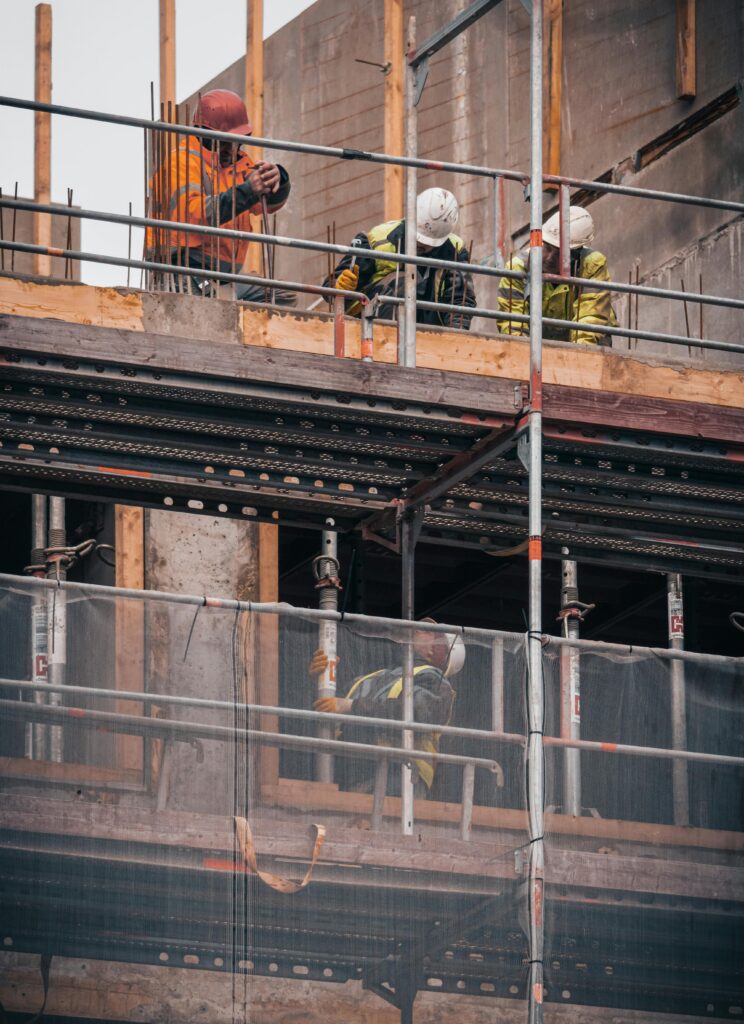
OSHA categorizes struck-by injuries as one of the “Fatal Four.” These are the four construction accident types responsible for the most worker deaths nationally. But unlike falls from height, struck-by is not a single accident type. It is four distinct categories with meaningfully different causation profiles. Each category is analyzed differently under New York law.
The difference between a falling-object struck-by claim and a flying-object struck-by claim is not semantic. It determines whether § 240(1) applies at all. It determines whether the case carries strict liability against the property owner and general contractor or requires proving negligence through § 241(6) or § 200.
Treating all struck-by injuries as the same legal claim is a significant error. The Dearie Law Firm, P.C. has been analyzing the specific mechanisms of struck-by accidents and matching them to the correct legal theories for more than 35 years.
For a broader overview of struck-by and crush construction accidents, including backing vehicles, falling objects, swinging loads, machinery hazards, responsible parties, and compensation, visit our New York City Struck-By And Crush Accident Lawyers page.
Category One: Falling Object — The § 240(1) Analysis
A falling-object struck-by accident occurs when an object at a height comes down and strikes a worker below. This is the category most directly addressed by Labor Law § 240(1). But the statute’s application to falling-object cases requires satisfying a two-part test established by the Court of Appeals in Narducci v. Manhasset Bay Associates and subsequent decisions.
First, the object must have been at a height at the time it fell. The statute does not protect workers from objects that were already at the same elevation as the worker when they began to move.
Second, the object must have fallen because an adequate elevation-related safety device was not provided. This is the part that determines most falling-object § 240 cases. A brick that falls from scaffolding because no overhead protection was provided for workers below satisfies this requirement. A brick that falls from scaffolding because a worker accidentally knocked it over may face the “sole proximate cause” defense. The analysis of whether the failure was in the safety system (§ 240 satisfied) or purely in the conduct of an individual worker (§ 240 may be defended) is highly fact-specific.
Common falling-object scenarios that generate strong § 240 claims: Unsecured tools or materials on elevated work platforms. Materials inadequately secured in hoisting nets or slings. Objects falling from a crane load because rigging was undersized or improperly attached. Building materials sliding off elevated storage areas.
Category Two: Flying Object — The § 241(6) and Negligence Analysis
A flying-object struck-by accident involves a projectile traveling laterally. Not falling vertically. The object strikes a worker. The most common sources are power tools (nail guns, grinders, circular saws, pneumatic chippers), struck-by debris from concrete cutting or masonry demolition, and welding spatter.
Flying-object cases are fundamentally different from falling-object cases in terms of the applicable legal theory.
Labor Law § 240(1) does not apply to flying objects. The statute addresses gravity-related hazards. The elevation differential and the force of gravity are both required for § 240. A nail gun projectile traveling horizontally is not a gravity case. Courts have consistently held that § 240 does not extend to it.
The applicable theories for flying-object injuries are § 241(6) (Industrial Code violations related to tool guarding, eye protection requirements, work zone separation) and § 200 / general negligence (failure to implement adequate work zone controls, failure to require appropriate PPE). Specific Industrial Code provisions including 23 NYCRR § 23-1.8 (eye and face protection) and § 23-9.2 (power-operated equipment requirements) are frequently applicable in flying-object cases.
Category Three: Swinging Object — A § 240(1) Gray Area With Growing Case Law
A swinging-object struck-by accident typically involves a crane load, a rigged material, or a counterweight in motion. This category occupies contested legal territory under § 240.
The statute’s language refers to objects “falling” from heights. A swinging crane load is not falling in the literal sense. But the practical risk is identical. An elevated mass under the influence of gravitational and kinetic forces strikes a worker who had no way to avoid it.
New York courts have increasingly recognized swinging-object cases as falling within § 240(1). The analysis turns on whether the swing results from a failure of the elevation-related safety system. Specifically: inadequate load control devices (tag lines, load monitoring systems, or crane positioning that should have prevented uncontrolled lateral movement).
The logic: § 240 requires devices that prevent the kind of gravity-related movement of elevated objects that injures workers below. A swinging load that strikes workers is precisely this kind of hazard.
However, this analysis is not settled. Individual cases turn on the specific mechanism of the swing and what safety systems were present or absent.
Category Four: Rolling or Runaway Object — The § 241(6) Analysis
Rolling-object struck-by accidents involve objects moving laterally at grade level. A reel of wire rolling off a pallet. An improperly chocked vehicle or piece of equipment that rolls into a worker. Materials sliding off an inclined surface.
These are not gravity hazards in the elevation sense § 240 addresses. Courts have consistently held § 240 inapplicable to rolling-object accidents.
The applicable theories are § 241(6) based on Industrial Code provisions governing material storage (23 NYCRR § 23-2.1, requiring materials to be stored so they cannot fall, roll, or otherwise become a hazard) and general negligence for inadequate chocking, blocking, or material securing practices. Product liability may also apply if a material handling device (a pallet, a spool, a reel stand) was defective.
The Evidence That Determines Which Category Applies
The legal theory in a struck-by case depends entirely on the accurate characterization of the accident mechanism. This is not always obvious from the injured worker’s perspective. A person who was struck by something and knocked unconscious may not have seen what hit them or where it came from.
Reconstruction of the accident through witness statements, the physical evidence remaining at the scene, video footage, and OSHA investigation materials is often necessary to establish whether the object was falling, flying, swinging, or rolling. This is a critical early step in struck-by accident representation.
Contact The Dearie Law Firm for a Free Case Review
If you were struck by an object on a New York construction site, the legal theory that applies to your case depends on exactly how the accident happened. Call The Dearie Law Firm, P.C. for a free consultation. We analyze struck-by injuries in detail. We pursue the theories that give our clients the strongest possible claim. No fee unless we recover for you.