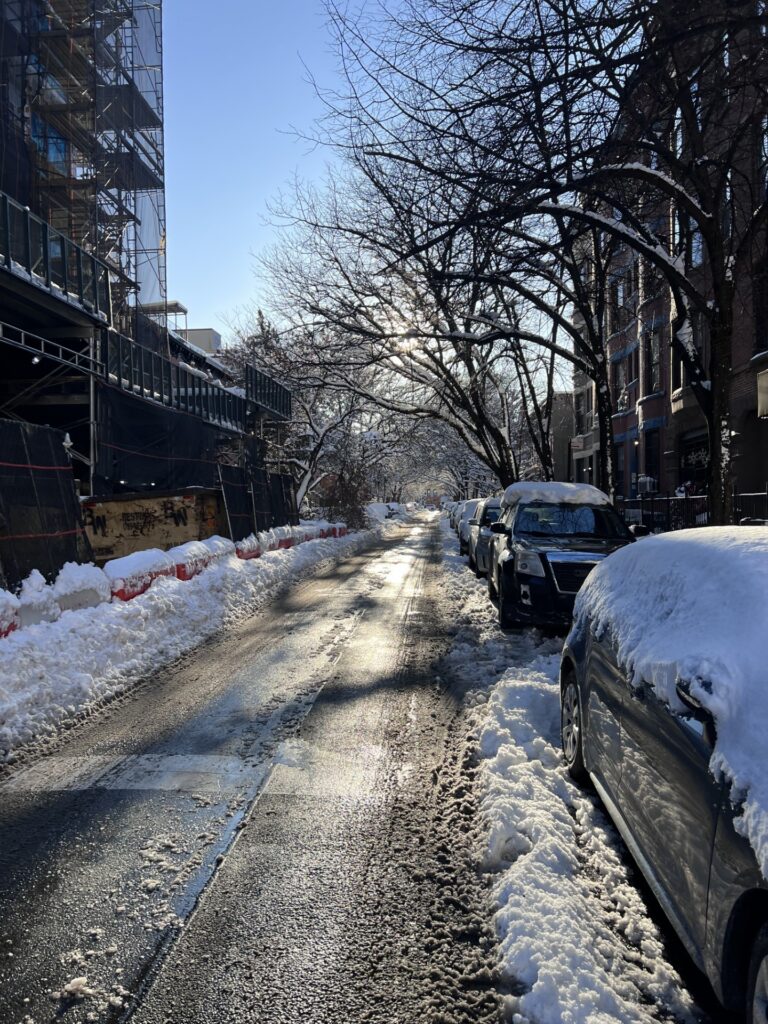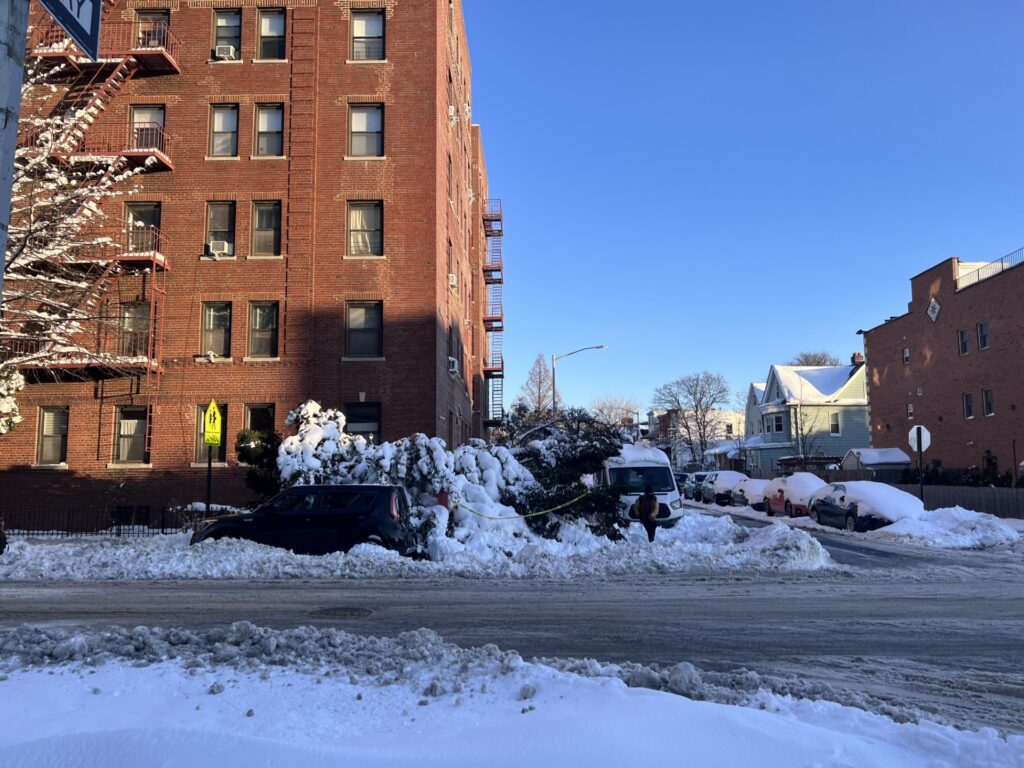
The Blizzard of 2026 buried New York with dangerous, fast-changing conditions: heavy accumulation, strong winds, and days of cleanup hazards like refrozen slush, black ice, and snow piles narrowing sidewalks and crossings. Reports described widespread travel disruption across the Northeast on February 23, 2026, with many areas seeing more than two feet of snow and wind gusts reaching extreme levels. In NYC, Central Park was reported at about 19.7 inches, with higher totals in parts of the boroughs.
If you slipped after this storm, the important thing is to get medical help and get to a safe place. Then, you should call an experienced ice slip and fall lawyer to help you act quickly for potential damages you could seek.
Below is updated, guide on responsibility after a major NYC blizzard.
NYC Sidewalk Snow Rules: Who Has To Shovel And When
In New York City, the owner of the building is typically responsible for clearing snow and ice from the sidewalk in front of the property, not the City. NYC’s Department of Sanitation requires owners to clear a path at least four feet wide, clear around curb cuts/ramps and hydrants, and use sand/salt when ice cannot be fully removed.
NYC also uses time-based deadlines that depend on when the snow stops. As a general rule, if snowfall ends during the day, owners often have 4 hours to clear; if it ends in the evening, the window is longer; and overnight snowfall must be cleared by the next morning.
Who Can Be Liable After The Blizzard Of 2026
1) Building Owners, Landlords, And Property Managers
If you fell on a sidewalk abutting a business or larger residential building, NYC’s “Sidewalk Law” generally places responsibility on the owner (and sometimes the managing agent) to maintain that sidewalk, including snow and ice cleanup.
Common blizzard-related failures we see:
- Delayed shoveling or salting after the storm ended
- Plowing snow onto sidewalks or curb cuts
- Leaving compacted snow that later refroze into ice
- Creating a narrow “goat path” that forces pedestrians into the street
2) The City Of New York
The City is not automatically responsible for every icy sidewalk. Under NYC rules, the City is often not liable for sidewalks abutting many businesses and large buildings, but there are exceptions, including situations involving certain smaller owner-occupied homes and other fact-specific scenarios.
If a municipal entity might be involved, deadlines can be much shorter than a standard personal injury case, so it matters to identify the correct defendant quickly.
New York’s “storm in progress” doctrine often limits liability while the storm is actively ongoing, but responsibility can return once conditions stabilize and there has been a reasonable opportunity to clear and treat the area.
4) Snow Removal Contractors
After a storm like the Blizzard of 2026, many owners hire plow/shovel/salting companies. A contractor can be liable when negligent removal creates or worsens a hazard, or when contract duties and on-site conduct support responsibility for safety conditions.
Deadlines: Notice Of Claim And Why You Should Talk To A Lawyer Before Filing Anything
If your fall may involve the City or another public entity, you may need to serve a Notice of Claim quickly, and you may later face a 50-h hearing requirement. These are strict, technical steps. A mistake can damage or end a valid case.
Even in non-municipal cases, there are statutes of limitation and evidence disappears fast after a blizzard cleanup. The safest move is to speak with a lawyer early, as soon as it’s safe, before you file anything or give a recorded statement.
What To Do Now After A Snow Or Ice Slip And Fall
Step 1: Get Medical Care
Head injuries, fractures, and soft-tissue injuries are common in winter falls. Do not “wait it out.” Your medical record often becomes the backbone of the claim.
Step 2: Document The Scene Immediately
Blizzard conditions change hourly. If you can, collect:
- Photos and video of the exact spot (wide and close-up)
- Footwear traction, the surface condition, and lighting
- Nearby signs, addresses, store names, building numbers
- Snow piles, plow ridges, curb cuts, and narrowed pathways
Step 3: Identify Witnesses
Names, numbers, brief written notes, and any nearby workers who saw the fall.
Step 4: Preserve Clothing And Footwear
Do not wash or discard items. Bag them.
Step 5: Call A Lawyer
A lawyer can help ensure the process is thorough and all deadlines are met. Call an experienced ice slip and fall attorney today.
How A Lawyer Can Prove Negligence After A Major Storm
Strong cases often come down to proof that the responsible party had:
- A duty to clear/treat/maintain
- Notice of the condition (actual or constructive)
- Enough time after the storm to address it
- A failure to act reasonably, or they made it worse
Your attorney may pursue evidence like maintenance logs, contractor agreements, surveillance footage, weather timing, 311 history, and witness testimony, then connect it to NYC snow-law duties and reasonable post-storm practices.
Talk To A NYC Slip And Fall Lawyer After The Blizzard Of 2026
If you were hurt in a snow or ice slip and fall after the Blizzard of 2026, it is worth getting legal advice quickly, especially if a public entity might be involved or if the area was “cleaned” in a way that created new hazards.
The Dearie Law Firm, P.C. handles premises liability claims, including snow and ice cases.